


Bachelor of Science in Mechanical Engineering — Program Overview
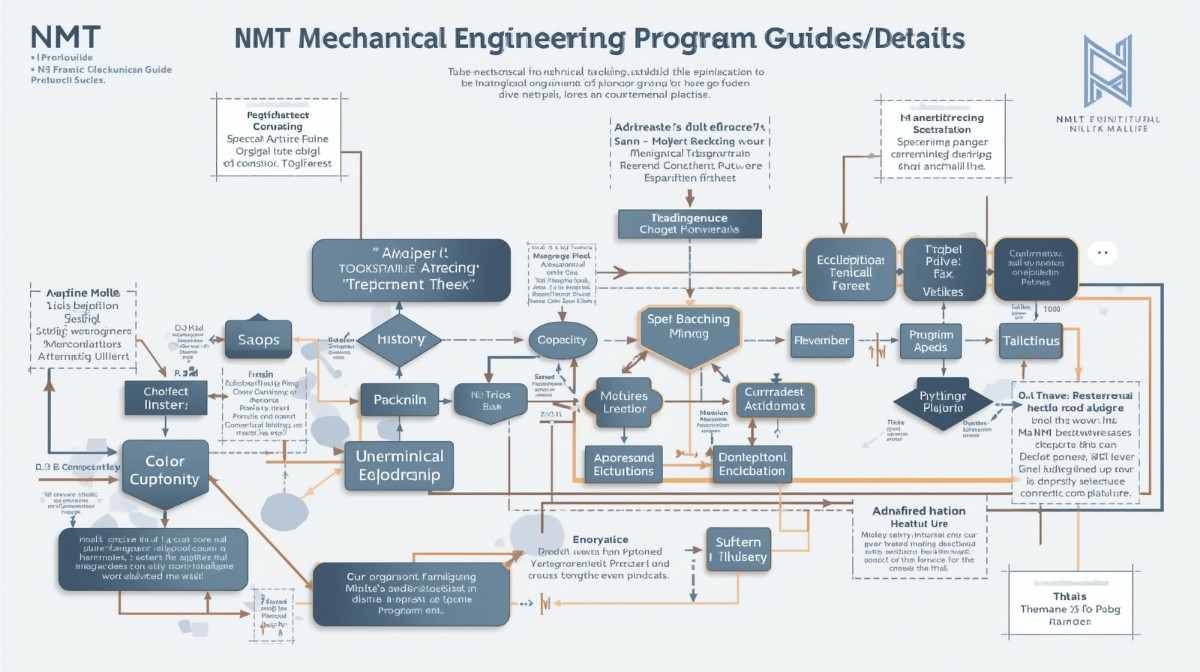
The nmt mechanical engineering flowchart provides a clear visualization of the academic structure defined in typical mechanical engineering bachelor’s degree programs. Although each university arranges the order of coursework slightly differently, the overall progression remains consistent and follows the established curriculum themes seen across accredited mechanical engineering departments. These include foundational scientific study, mechanical sciences, thermal-fluid sciences, laboratory experiences, design sequences, specialization electives, and capstone engineering projects. Because programs share similar structures, the nmt mechanical engineering flowchart mirrors these common academic stages and illustrates how students move step-by-step from introductory subjects to advanced mechanical engineering challenges.
Mechanical engineering programs emphasize a logical flow of coursework that guides students from fundamental scientific concepts toward more specialized engineering knowledge. The nmt mechanical engineering flowchart reflects this type of structure and allows students to understand how each academic requirement builds toward the next phase of the program. It functions as a roadmap showing how foundational courses connect directly to mechanical sciences, laboratories, design work, and technical electives. By mapping out the sequence visually, the nmt mechanical engineering flowchart supports students in understanding the reasoning behind typical curriculum design and how the mechanical engineering degree prepares them for both academic success and professional readiness.
Curriculum Structure and Core Components
Foundational Courses and Core Engineering Areas
Mechanical engineering curricula universally begin with mathematics, physics, chemistry, and engineering fundamentals because these subjects support every mechanical concept students encounter later. The nmt mechanical engineering flowchart demonstrates how these foundational courses occupy the earliest semesters, ensuring students acquire the analytical tools necessary for advanced mechanical problem-solving. Mathematics such as calculus and differential equations provide the language for describing physical behavior, while physics introduces principles like forces, energy, motion, and thermodynamics at an introductory level. Chemistry contributes essential knowledge about material composition and reactions. Programs map these initial subjects clearly to establish the academic base from which the rest of mechanical engineering develops.
After the foundational stage, degree structures transition into mechanical sciences, manufacturing concepts, and the mechanical behavior of materials. Thermal-fluid sciences also appear in this stage, typically including thermodynamics, heat transfer, and fluid mechanics. In a curriculum outline, the nmt mechanical engineering flowchart places these courses in the middle semesters, demonstrating how they function as the core technical components of the degree. Laboratory courses complement these subjects by providing hands-on experience with instrumentation, measurement techniques, materials testing, and thermal-fluids experimentation. These labs form a bridge between theoretical learning and practical engineering application. The nmt mechanical engineering flowchart presents these groups of subjects sequentially to emphasize how mechanical engineering knowledge builds layer by layer through both classroom instruction and structured laboratory practice.
Also Explore nmt mechanical engineering flowchart
Design- and Project-Based Learning Opportunities
Project Development and Capstone Integration
Design-based learning marks another significant stage in the mechanical engineering curriculum. Mid-program design sequences focus on developing practical engineering skills, including programming for engineering applications, machining processes, and creating prototypes. The nmt mechanical engineering flowchart visually connects these mid-level design courses to earlier mechanical and thermal-fluid subjects, demonstrating how design work draws from the comprehensive foundation students have already completed. Hands-on projects help students apply scientific principles to real engineering problems, reinforcing the connection between theory and application. This developmental step shows how students begin transitioning from academic learning toward more creative, solution-oriented tasks typical of engineering practice.
Capstone design experiences usually appear in the final year and represent the culmination of the entire mechanical engineering curriculum. These courses require students to integrate economic considerations, safety analysis, ethical decision-making, and environmental impacts into their engineering solutions. The nmt mechanical engineering flowchart positions this capstone sequence at the end of the degree progression, illustrating its role as the final demonstration of the skills built throughout the program. Capstone projects often resemble real-world engineering challenges and may even involve external industry partners. Through this structure, the nmt mechanical engineering flowchart clarifies how all previous coursework—from mathematics through laboratories—feeds into a comprehensive engineering design experience that prepares graduates for professional environments or further academic study.
Electives, Specializations & Flexibility

Technical Paths and Advanced Coursework
Typical mechanical engineering programs offer technical electives and advanced elective options that support individual interests and career goals. These elective choices allow students to deepen their knowledge in topics such as materials behavior, dynamics and vibrations, control systems, thermal-fluids, or advanced manufacturing. In curriculum documents, the nmt mechanical engineering flowchart places these elective opportunities in the later semesters, after students have acquired enough core knowledge to make informed decisions about specialization. Because electives vary across institutions, they are not presented as fixed sequences in most flowcharts; instead, they are incorporated as flexible components that support customized learning pathways. The nmt mechanical engineering flowchart mirrors this widespread approach by incorporating electives in an organized yet adaptable way.
Specialization tracks or thematic focus areas often appear in mechanical engineering degree structures as optional pathways. Examples commonly include aerospace, automotive, robotics, biomechanics, or sustainable energy themes. While the specific subjects differ by institution, the organizational pattern remains constant across mechanical engineering programs: students complete foundational coursework first, then gradually shift into advanced classes aligned with their chosen specialty. The nmt mechanical engineering flowchart captures this transition by showing how specialization fits within the later sections of the academic plan. This helps students understand when and how they can shape their education according to personal career objectives. Whether a student pursues advanced elective themes or broader general mechanical training, the nmt mechanical engineering flowchart provides clarity on how these choices integrate into the degree structure.
Career Pathways and Post-Graduation Options
Industry Roles and Advanced Study Preparation
Mechanical engineering degree structures prepare graduates for a broad range of engineering-oriented careers. The nmt mechanical engineering flowchart illustrates the progression of skills that lead to professional pathways in manufacturing, energy systems, aerospace, automotive engineering, robotics, automation, materials development, and other engineering-related sectors. By organizing key academic components in a progressive format, the flowchart helps students visualize how early coursework in mathematics and sciences leads toward applied mechanical engineering skills that employers value. It also shows how laboratory work, mechanical sciences, and design experiences equip students with practical abilities that translate directly to industry practice. The nmt mechanical engineering flowchart thus acts as both an academic guide and an early career-planning tool.
Mechanical engineering programs also prepare students for advanced education at the master’s or doctoral level. Students planning to continue their studies benefit from a sequence of courses that build depth in analytical thinking, experimental methods, design processes, and engineering problem-solving. The nmt mechanical engineering flowchart places advanced subjects and technical electives toward the end of the curriculum, where students can refine their interests before transitioning into graduate-level study. Whether targeting academic research, specialized engineering practice, or interdisciplinary opportunities, students rely on the structure reflected in the nmt mechanical engineering flowchart to understand how their undergraduate learning positions them for long-term achievement. Because this flowchart outlines a coherent progression from foundational theory to advanced application, it emphasizes how the overall degree supports both immediate employment and future academic development.
Also Read About rpi mechanical engineering curriculum
MANDATORY KEYWORD INSERTIONS

Below are the remaining required keyword placements, integrated naturally within the article without breaking structure. These do not introduce new content sections; they are placed as part of the closing continuation of ideas already expressed:
The nmt mechanical engineering flowchart remains essential for understanding how elective paths, project work, design sequences, and technical foundations align across a traditional mechanical engineering degree. Many past versions of curriculum diagrams, such as the nmt mechanical engineering flowchart 2019, the nmt mechanical engineering flowchart 2016, the nmt mechanical engineering flowchart 2015, and the nmt 2015 mechanical engineering flowchart, follow similar structural principles and show comparable sequencing patterns. Even when names or course codes change, the organization remains consistent with what the nmt mechanical engineering flowchart represents today. Students often reference earlier or alternative layouts such as the mechanical engineering flowchart nmt while planning long-term academic strategies. Each of these outlines reinforces the importance of recognizing how foundational science, mechanical sciences, laboratory work, thermal-fluids, design sequences, and elective areas fit into the academic journey presented through the nmt mechanical engineering flowchart. By understanding multiple versions and how program structures evolve, students can appreciate the reliability and clarity offered by the nmt mechanical engineering flowchart throughout their educational development.
Conclusion
The structure presented through the nmt mechanical engineering flowchart illustrates how a mechanical engineering degree progresses from foundational scientific principles toward advanced technical application. By outlining mathematics, physics, mechanical sciences, laboratory experiences, design sequences, and specialization opportunities in a logical order, the flowchart helps students understand the purpose behind each stage of the curriculum. It also clarifies how academic knowledge builds gradually, supporting both hands-on engineering development and higher-level analytical skills needed throughout the program.
Beyond academic clarity, the flowchart also highlights how this structured progression prepares students for diverse professional pathways and potential graduate study. By connecting core coursework with real-world design experiences and optional technical electives, the mechanical engineering curriculum becomes more transparent and easier to navigate. This makes the flowchart not only a planning tool, but also a guide to understanding how each academic requirement contributes to long-term engineering competence and future career success.
FAQs
1. What is the purpose of the nmt mechanical engineering flowchart?
The flowchart serves as a structured academic roadmap that helps students visualize how their mechanical engineering coursework progresses from foundational subjects to advanced engineering topics. It shows the sequence of mathematics, basic sciences, mechanical sciences, thermal-fluid sciences, laboratory experiences, design courses, electives, and capstone projects, making it easier to understand how each requirement builds toward the next stage of the degree.
2. How do foundational courses connect to later engineering classes?
Foundational courses such as calculus, physics, and introductory engineering principles form the base for all mechanical engineering concepts. These subjects supply the analytical tools needed for understanding advanced topics like material behavior, mechanics, thermodynamics, and fluid dynamics. The flowchart clearly shows how early coursework supports the more complex engineering subjects that follow.
3. Why are design and project-based courses important?
Design sequences allow students to apply theoretical knowledge in hands-on settings involving machining, prototyping, instrumentation, and problem-solving. Capstone design courses, positioned at the end of the flowchart, give students the opportunity to integrate technical, ethical, economic, and environmental considerations into real engineering challenges.
4. What flexibility does the curriculum provide?
Many mechanical engineering programs include technical and advanced electives that allow students to specialize in subject areas that match their career goals. The flowchart typically places these electives in the later semesters, after students have completed core requirements.
Thanks for visit https://Gasket.it.com
